









Pre-emptive vs deferred cookie loading on marketing sites: what Webflow teams get wrong
Two philosophies that sound similar but behave differently
Pre-emptive loading fires tags as soon as the document loads—sometimes before the visitor reads the headline. Deferred loading waits until policy allows it: after consent, after a meaningful interaction, or after a configured delay that still matches your legal reading. On Webflow, the Designer does not choose between these for you; custom code and embeds do, which is why two visually identical sites can have opposite compliance postures.
Teams “get it wrong” when they conflate showing a banner with controlling execution. A banner that appears while dozens of requests already left the browser is a UX fig leaf, not a control plane.
What visitors actually experience on a typical Webflow marketing build
Heavy hero videos, hero Lottie files, and third-party reviews widgets compete for the main thread. If analytics and heatmaps join that race on first paint, you pay twice: slower Largest Contentful Paint and a consent story that does not match what already happened in the network log. For regulated industries, that log matters more than the shade of purple on your “Accept” button.
Deferred loading without breaking your analytics story
Deferred does not mean blind. It means ordering:
- Load what is strictly required for security, billing, or core site function.
- Surface consent where required and persist the choice durably.
- Hydrate analytics and marketing stacks only when the matching category is granted.
On Webflow, enforce that order with the same rigor you apply to class naming and component structure. If only one engineer knows which snippet bypasses the gate, you will eventually ship a bypass by accident.
Pre-emptive patterns that are sometimes justified
There are narrow cases—fraud prevention, certain security beacons—where early execution is intentional and documented. The failure mode is marketing tags inheriting that excuse. Keep exceptions rare, named, and reviewed by someone who reads privacy guidance for a living, not only JavaScript stack traces.
How FlowAppz Cookie Consent keeps execution honest
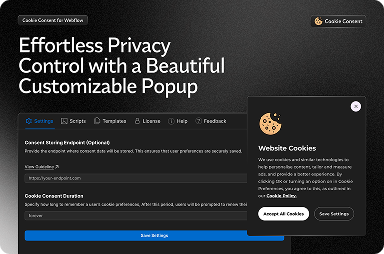
FlowAppz Cookie Consent treats blocking as a first-class concern for Webflow: register scripts with categories, keep them from running early, and keep the visible UI in sync with what the network panel shows after publish.
Explore Cookie Consent for Webflow-native configuration and templates.
QA steps that catch “silent early load” bugs
- Record a cold load with DevTools open: sort by domain and confirm marketing hosts stay quiet until consent.
- Repeat after accepting, rejecting, and reopening “Manage preferences.”
- Retest after duplicating the site to a new workspace—clones are where old head tags hide.
If deferred loading is your policy, make sure the browser agrees—not only the marketing slide deck.


