









CSV import for Webflow CMS: field mapping, references, and rollback discipline
CSV import is a migration, even when the client says it is a quick upload
Spreadsheets hide merged cells, trailing spaces, duplicated slugs, and “helpful” Excel date formats that explode when parsed. Treat every import as a migration: schema mapping document, dry run on staging, and a rollback story when production needs to be unwound.
Field mapping: names, types, and required fields
Align CSV headers to CMS field slugs explicitly—do not assume case-insensitive magic. Note which fields are required, which accept references, and which have option sets that reject unknown values. Reference fields often need stable IDs or slugs in the sheet, not display titles that change next week.
References and ordering
If Collection B references Collection A, import A first or stage rows with unresolved references for a second pass. Document the dependency graph on one page so the next person does not rediscover it during a 10 p.m. launch.
Rollback: snapshots, exports, and communication
Before large writes, export current CMS content to CSV or backup according to your runbook. If something goes wrong, you need a known-good artifact and a comms line to stakeholders (“We paused imports at 14:05 UTC; no customer-facing pages were affected”).
Validation passes that save embarrassment
- Row count matches expectation after import.
- Spot-check random items in Designer preview and on published URLs.
- Search for broken reference chips and empty required fields.
Bulk CMS Editor for ongoing operations
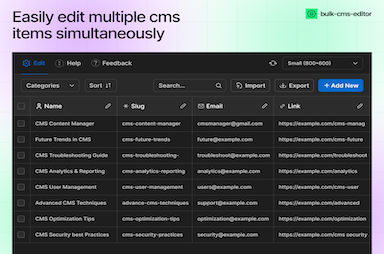
FlowAppz Bulk CMS Editor supports teams that edit, search, export, and manage Webflow CMS items at scale after the first import lands.
Learn more at Bulk CMS Editor.
When not to CSV at all
If updates are continuous and multi-step approvals matter, consider editorial workflows with smaller batches instead of one giant file—throughput is not the only success metric.
Imports are fast; trust is slow—protect both.


